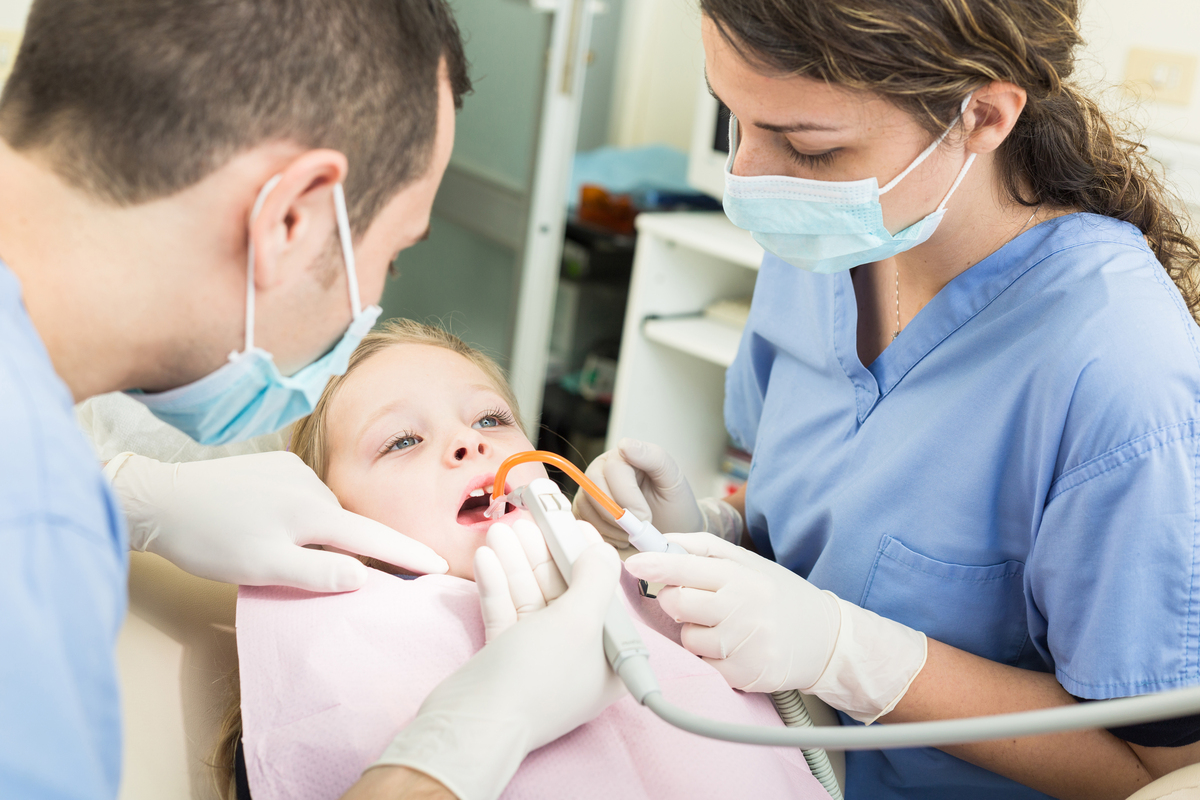
Dental X-rays are a vital tool for ensuring your child’s oral health, but as a parent, it’s natural to have concerns about radiation exposure, especially for young children. Dental X-rays allow the dentist to see what’s happening inside and between your child’s teeth, as well as beneath the gums and within the jawbone – places you can’t see with just the naked eye during a visual exam. So when should my child get their very first dental X-ray? It’s a common question, and the answer, like many things in dentistry, depends on a few factors.
The Right Age for a First Dental X-Ray
There is no universal age for a child’s first dental X-ray, as it depends on the individual child’s needs. It is generally recommended that children receive their first X-ray between the ages of 2 and 6 when their primary teeth fully erupt, or permanent teeth begin to emerge. If your child shows signs of dental issues—such as crowding, pain, or irregular tooth eruption—or has a history of cavities, we may recommend an X-ray sooner.
Reasons Dental X-rays Are Necessary For Children:
Several factors determine when a dental X-ray is necessary:
- Detecting Decay: One of the most common reasons is to identify cavities, especially those forming between teeth. These “interproximal” cavities are almost impossible to spot early without an X-ray. Early detection means simpler, less invasive treatment.
- Monitoring Tooth Eruption: X-rays help us track the development and eruption path of permanent teeth. We can ensure they’re coming in correctly and identify potential issues, such as impacted teeth (teeth stuck beneath the gum or bone).
- Assessing Bone Health: They provide a view of the bone surrounding the teeth, helping to detect any abnormalities or infections.
- Checking for Extra or Missing Teeth: Sometimes, children may have extra teeth (supernumerary) or be missing permanent teeth altogether. X-rays can reveal these conditions early.
- Evaluating Injuries: If your child has had a facial injury, an X-ray can help assess any damage to teeth or bone structures that might not be visible externally.
Our team evaluates each child’s unique situation to ensure X-rays are only taken when necessary, minimizing radiation exposure.
Are Dental X-Rays Safe for Kids?
Modern dental X-rays, especially digital ones, use very low doses of radiation. Pediatric dentists also take several precautions to minimize exposure, including:
- Digital X-rays: These reduce radiation exposure by a significant margin compared to traditional film X-rays.
- “As Low as Reasonably Achievable” (ALARA) Principle: Dentists adhere to this principle, meaning they use the lowest amount of radiation necessary to obtain a diagnostic image.
- Lead Aprons and Thyroid Collars: While recent ADA guidelines suggest these may not always be necessary with modern equipment, many practices still use them as an added precaution, especially for children.
The benefits of early detection and intervention far outweigh the minimal risks associated with dental X-rays. Identifying problems early can prevent more extensive and uncomfortable procedures down the line, ensuring your child’s long-term oral health.
Peace of Mind for Parents
At Brinkley Dental Group, you can trust our commitment to advanced technology and compassionate care. We make sure every dental X-ray your child receives is both highly effective for their oral health and exceptionally safe. We are committed to providing the highest standard of care with the lowest possible risk.
Have questions or concerns? Don’t hesitate to speak with our friendly team. We’re here to provide clarity and ensure you feel completely at ease with your child’s dental care journey. Schedule your child’s appointment with Brinkley Dental Group today.